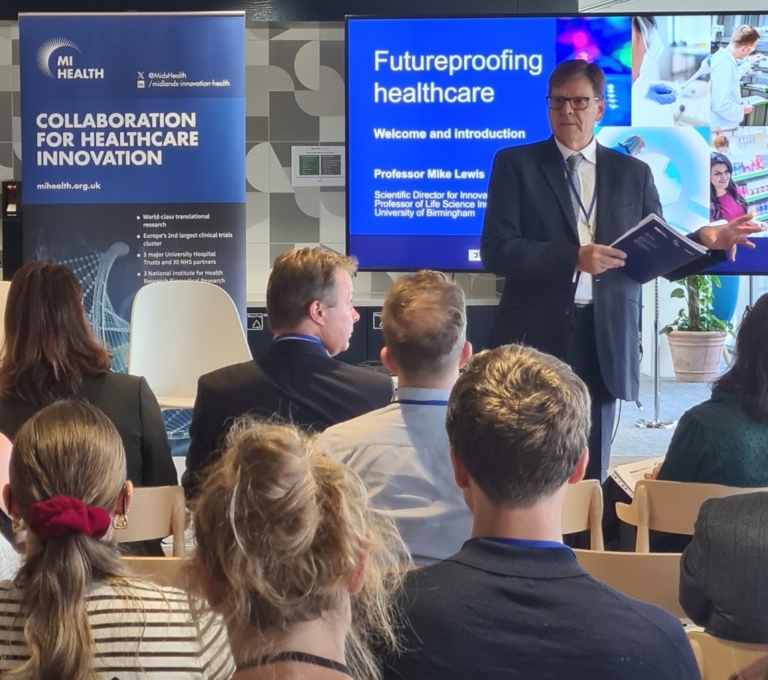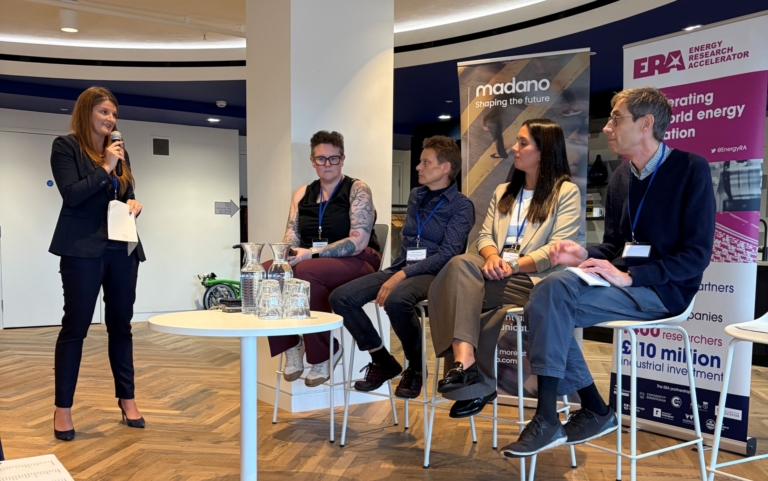

MI Health and the Energy Research Accelerator (ERA) are working together to facilitate joint activity to address energy and net-zero challenges faced across the health and community care sectors.
This culminated in a report which you can read here:
To guide discussion and collaboration, we surveyed the research community and initially identified 7 current regional research areas. We have then further grouped these into 4 themes based on responses from the health sector regarding their priorities.
These themes aim to cover the breadth of opportunities for innovation, research, and impact, from clinical practice to estates management, from community wellbeing to transport, from green supply chains to waste management and more.

We then worked with Madano to deliver workshops to cover these 4 themes with the aim of:
We invited researchers, practitioners, and partners to attend one or more of the 4 virtual sessions in May to help shape collaborative actions.
Workshop 1: Futureproofed Energy, Decarbonisation & Net-Zero Initiatives in the NHS and the Community
Workshop 2: Policy, Data & System-Level Innovation
Workshop 3: Sustainable MedTech, Advanced Materials, Design & Clean Energy Technologies
Workshop 4: Supply Chains, Biomanufacturing & Industrial Sustainability & Waste Management & Circular Economy
1. Adopt a collaborative whole-system view, considering estates, clinical pathways, community care, medicines, devices, digital infrastructure, transport, procurement and waste together.
3. Reduce avoidable demand before major capital investment, from improving building controls, metering and maintenance to preventing waste, optimising medicines and supporting prevention and appropriate care closer to home.
2. Create data that is robust enough to act upon, connecting existing information to provide decision-ready evidence for NHS organisations rather than creating additional reporting burdens.
4. Plan healthcare as part of place-based energy and climate resilience, recognising hospitals and community healthcare facilities as critical local infrastructure.
5. Use procurement and circularity to shape markets, moving beyond upfront purchase price towards whole-life value, including carbon, durability, repair, reuse, resilience and end-of-life treatment.
7. Establish the Midlands Healthcare Net Zero Accelerator to connect these activities and create a pathway from regional demonstration to national adoption.
6. Build implementation capability, skills and behaviour change, ensuring sustainability is embedded within clinical practice, estates, procurement, finance, digital services, leadership and professional education.

Our report calls for the creation of a Midlands Healthcare Net Zero Accelerator to turn research and innovation into practical solutions for the NHS
The Midlands has the potential to become the UK’s leading demonstrator region for sustainable healthcare, according to a new report which sets out a practical roadmap for creating a lower-carbon, more resilient and future-ready health system.
Climate change, energy security, ageing estates, pressure on NHS finances, supply-chain disruption and growing demand for care are interconnected challenges that require a coordinated, whole-system response.
The report concludes that many of the technologies, research capabilities and examples of good practice needed to address these challenges already exist. The key challenge is connecting them to healthcare needs and creating the conditions in which successful innovations can be implemented and scaled.
At the heart of the report is a recommendation to establish a Midlands Healthcare Net Zero Accelerator. This is a regional delivery framework bringing together the NHS, universities, industry, local and regional government, funders and other partners.
Rather than creating another research centre, the Accelerator would connect existing expertise and initiatives around clearly defined healthcare challenges. It would support real-world demonstrator projects, coordinate funding and investment, help overcome procurement and implementation barriers and create a route through which successful regional innovations could influence national NHS policy, standards and procurement.
The report recommends that the first phase should move quickly from planning to delivery, with ERA and MI Health establishing a coalition of partners, selecting the first demonstrator projects and launching a minimum viable evidence platform within 12 months.
The report highlights the scale of the opportunity in a region serving around 11 million people, with 42 NHS trusts, 30 community diagnostic centres and almost 2,000 trust-reported sites. The Midlands also combines major strengths in energy systems, advanced manufacturing, medical technologies, materials science, data, supply chains, transport and clinical research.